Iron-Rich First Foods for Babies: Why Solids Start With Iron
24 September 2026 · 5 min read
Why should a baby's first foods be about iron?
Around six months, your baby's need for energy and nutrients starts to exceed what breast milk provides. That is the reason complementary foods begin when they do, and for iron the shift is sharp. Full-term babies are born with a reserve of iron laid down in the womb. Breast milk contains only a small amount of iron, but it is unusually well absorbed, and together those two things cover roughly the first four to six months. After that, breast milk alone is no longer an adequate iron source.
A baby aged 7 to 12 months has a recommended iron intake of 11 mg a day, which is more than a one to three year old needs. Your baby's iron requirement peaks exactly when they are still learning to eat.
Iron builds hemoglobin, the protein that carries oxygen around the body, and babies need it for their brains to develop normally. Low iron in early life has been linked to delays in cognitive development, learning and attention difficulties, and behavioral concerns that reach into school. It is not a rare problem. The WHO estimates that anemia affects 40% of children aged 6 to 59 months worldwide, with iron deficiency the most common nutritional cause.
| Question | What the guidance says |
|---|---|
| How much iron does a baby need at 7 to 12 months? | 11 mg a day — more than the 7 mg a one to three year old needs (Health Canada, via the CPS) |
| How often should iron-rich foods be offered? | At least twice a day (CPS) |
| Which iron is absorbed best? | Heme iron, from meat, poultry and fish; iron from plants and fortified foods is absorbed less |
| What helps absorption? | Vitamin C at the same meal — oranges, tomatoes, red peppers |
| When can cow's milk be a drink? | After 12 months (AAP); Canadian guidance allows whole cow's milk from 9 to 12 months |
| How much milk after the first birthday? | No more than 500 mL a day (CPS) to 24 oz, about 710 mL (AAP) |
| When is iron screened? | From about 9 to 12 months for mostly breastfed babies, 15 to 18 months for mostly formula-fed ones (AAP) |
Which foods are iron-rich for babies?
There are two kinds of dietary iron and they are not interchangeable. Heme iron comes from meat, poultry and fish, and is more readily absorbed. Non-heme iron comes from plants — legumes, vegetables, grains — and from iron-fortified infant cereal, and your baby takes up less of it.
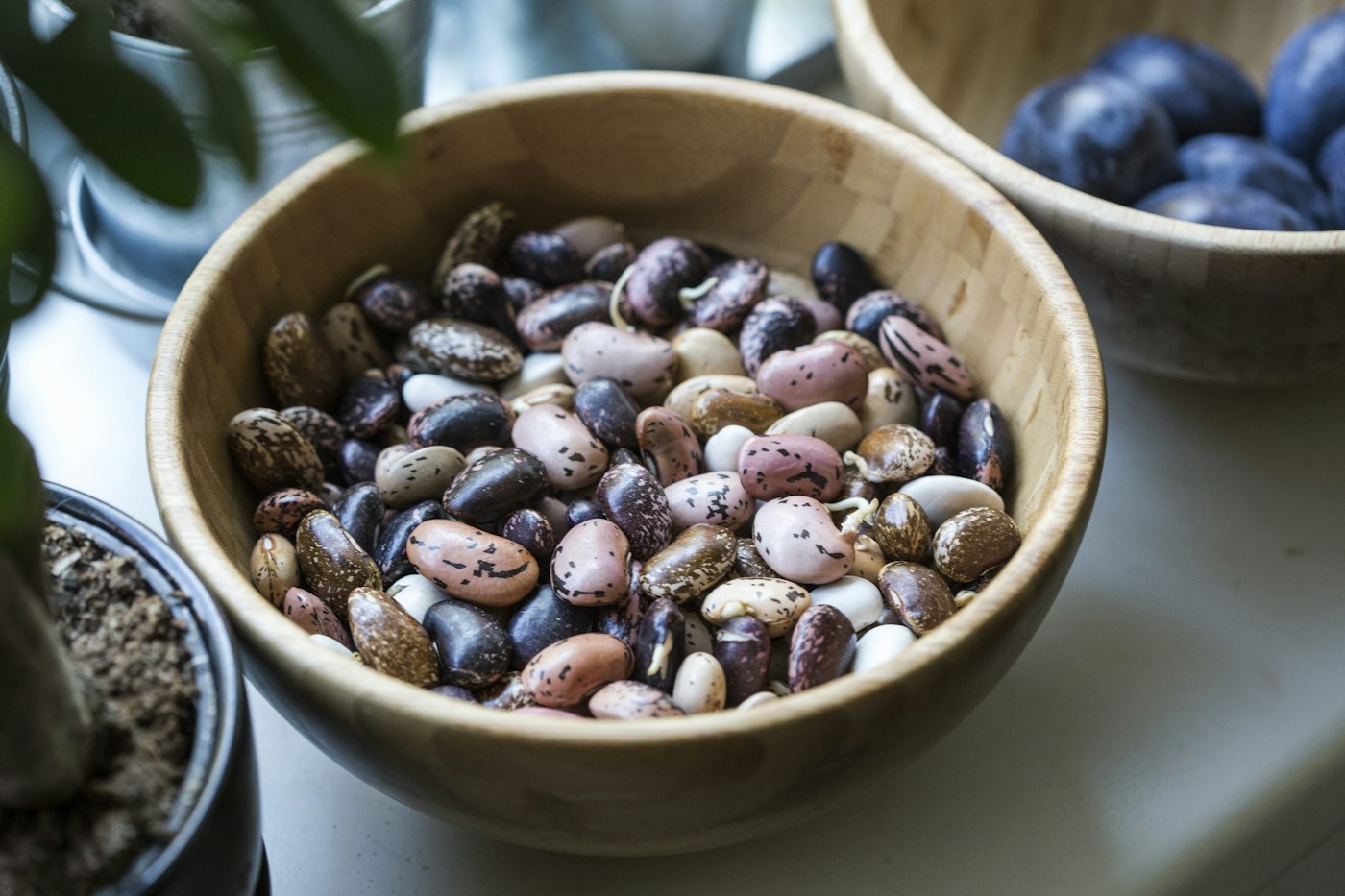
Both belong on the menu. Strong first foods include meat, poultry, fish, cooked whole egg, tofu, and well-cooked legumes such as beans, peas and lentils. Iron-fortified infant cereals made from oat, wheat, barley or rice are common first foods for the same reason. The Canadian Paediatric Society's advice is to offer iron-rich foods at least twice a day.
How to serve them at six months
Texture is what makes meat workable this early. Puree, mince or dice it, and chop or scrape stringy meat and moisten it with broth. Mash beans, peas and lentils. Offer a range of textures, from lumpy and finely minced to mashed or ground, plus soft finger foods, adding more texture as your baby grows. Always supervise meals, make sure your baby is sitting down to eat, slice round foods lengthwise, and skip whole nuts.
What helps iron absorb, and what blocks it?
Vitamin C is the lever worth pulling. Ascorbic acid keeps non-heme iron in the soluble form the gut can take up, so what you serve alongside matters. Try iron-fortified cereal with orange slices, or meat in a tomato sauce. Oranges, tomatoes and red peppers are all easy sources.
Working against you, polyphenols and phytates bind iron and reduce how much is absorbed. Added iron has been shown to be less available from high-phytate foods such as whole-grain cereal. Not a reason to avoid whole grains, just a reason to pair them.
The bigger blocker is cow's milk. The AAP says not to give it as a drink before 12 months: it is low in iron, it reduces iron absorption, and at this age it can cause blood loss in the stool. Canadian guidance is a little earlier, allowing whole cow's milk from 9 to 12 months once your baby is getting other sources of iron. After the first birthday the ceiling varies too — 500 mL a day in Canada, 24 oz (about 710 mL) from the AAP — but the principle holds: too much milk crowds out iron-rich food.
What if your baby has formula?
The picture differs here. Infant formula is typically fortified with iron, so a formula-fed baby has had a steady, reliable iron supply all along rather than drawing down birth stores. If you are not breastfeeding, the CPS advises a store-bought iron-fortified infant formula through the first 12 months.
That difference shows up in screening advice. The AAP suggests screening for iron deficiency at about 9 to 12 months for babies who mostly have breast milk, and around 15 to 18 months for babies who mostly have formula. It does not mean formula-fed babies can skip iron-rich solids. Every baby needs them from around six months.
When should you ask your doctor about iron?
Some babies start further behind. Preterm babies need iron before the four to six month mark, because the iron transfer late in pregnancy was cut short. Babies born at low birth weight need iron supplementation, with the amount depending on birth weight and diet. And a baby still exclusively breastfed past six months, without iron-rich solids, is drawing on stores that have already run down. Whether your baby needs a supplement, and how much, is a decision for your baby's doctor.
These are reasons to raise iron at your next visit, not a checklist to diagnose from:
- Skin that looks pale, yellowish or ashy, or faded color in the lips, nail beds or eyelids
- Unusual irritability or a persistently low mood
- Tiring easily, wanting more naps, or being noticeably less active than before
- Poor appetite or slow weight gain
- Mild muscle weakness
- Your baby was born preterm or at low birth weight, or is past six months with very little iron-rich food in their diet
Contact your doctor promptly if your baby is short of breath, has a racing heartbeat, or seems unusually weak or dizzy.
Official guidance
- World Health Organization — Infant and young child feeding
- World Health Organization — Anaemia
- Canadian Paediatric Society (Caring for Kids) — Iron needs of babies and children
- Canadian Paediatric Society (Caring for Kids) — Feeding your baby in the first year
- American Academy of Pediatrics (HealthyChildren.org) — Iron Deficiency and Anemia in Babies, Children and Teens
- Nutrients — A Systematic Review of Isotopically Measured Iron Absorption in Infants and Children Under 2 Years
Written by The MyBaby editorial team. How we source and review these.
MyBaby is not a medical device and does not provide medical advice, diagnosis or treatment. Always consult a qualified healthcare professional with questions about your child's health.