How Babies Learn to Talk, and What Actually Helps
8 July 2025 · 3 min read
Language starts long before the first word. Cooing, babbling, eye contact and turn-taking are all part of it, and the single most useful thing a parent does is respond to them — consistently, and in the moment.
What is the sequence, roughly?
Babies move from sounds to meaning over the first year and a half, and the CDC's milestone checklists give the clearest markers:
- Around 2 months — cooing and gurgling, turning towards a voice.
- Around 6 months — babbling, taking turns making sounds with you, responding to their own name.
- Around 12 months — strings of repeated sounds like "mamamama" and "babababa", understanding simple words like "no", waving.
- Around 15 months — trying one or two words besides "mama" and "dada", such as "ba" for ball.
Those describe what most children — 75% or more — do by that age, not a schedule your baby is failing to meet.
Why does responding matter more than talking at them?
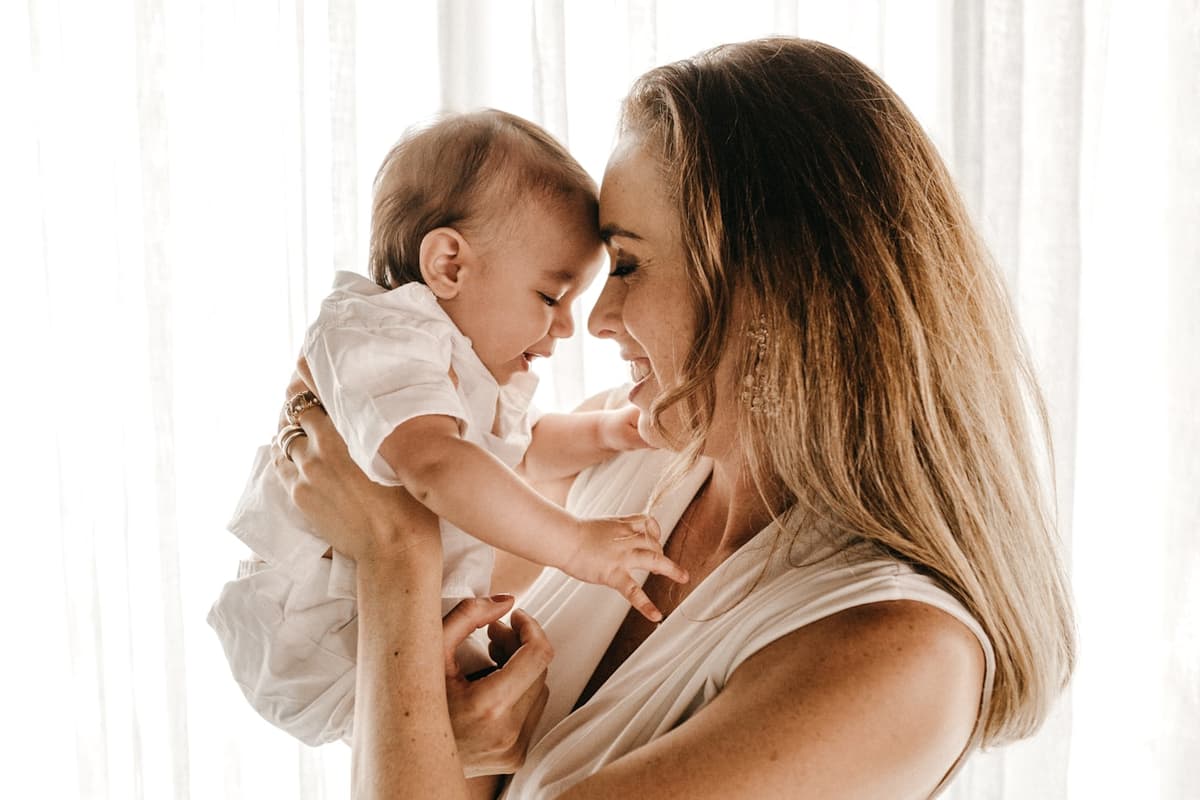
Because language is learned in a back-and-forth, not from exposure alone. Harvard's Center on the Developing Child calls this serve and return: the baby serves — a babble, a gesture, a look — and the adult returns it with words, eye contact or a touch. Those exchanges are what build the neural connections language runs on.
The practical consequence is that a baby who babbles at you and is answered learns faster than one who hears more total words with no reply. Volume of speech is not the active ingredient; responsiveness is.
What can I do in an ordinary day?
Nothing here needs setting time aside. All of it fits into things you were doing anyway.
Narrate what you are doing
Say what you are doing while you do it — changing a nappy, filling the kettle, choosing apples. It feels ridiculous for about a week and then stops feeling like anything.
Answer every sound
When your baby coos or babbles, answer as though they said something. Then pause. The pause is the part people skip, and it is where the baby learns that a conversation has turns in it.
Read every day, from early on
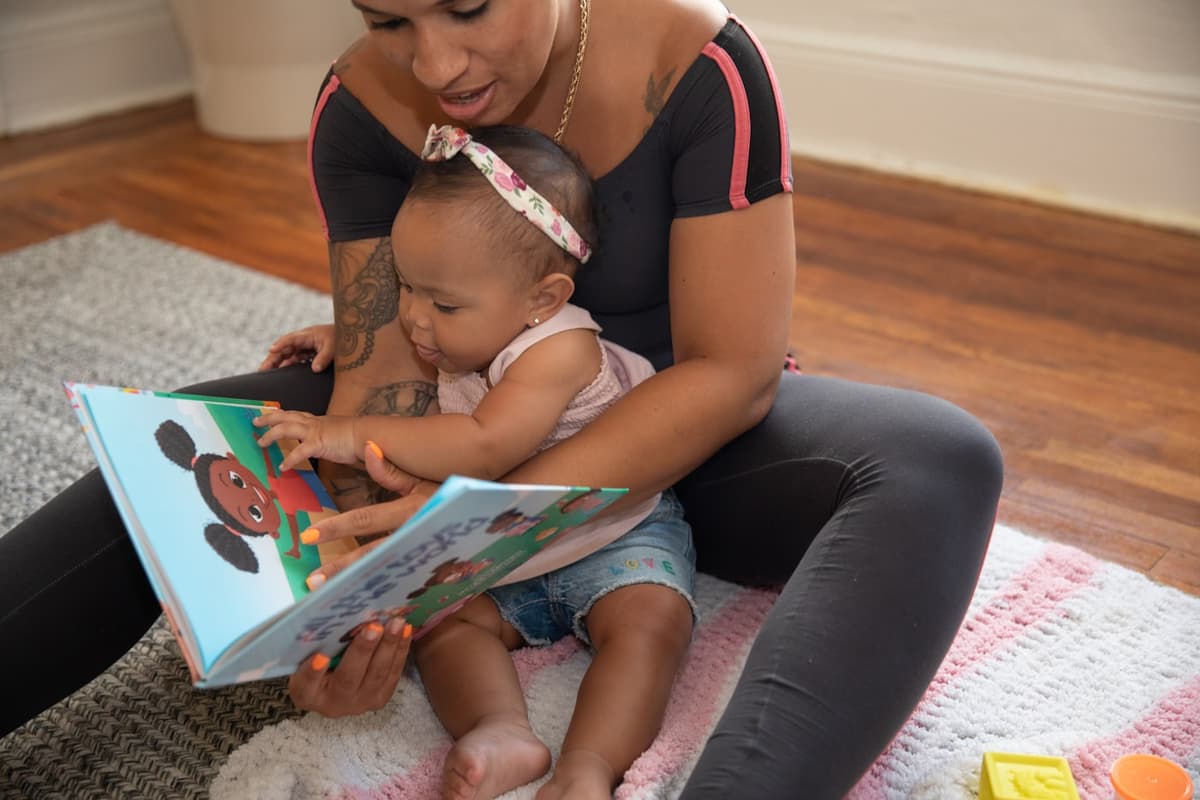
Picture books work from the first weeks — not because a newborn follows the story, but because it is sustained, face-to-face attention with words attached to pictures. Let them grab and chew the book.
Sing, and repeat yourself
Songs and rhymes carry the rhythm of a language, and repetition lets a baby predict what comes next. Predicting is a large part of understanding.
Point, wave, and pull faces
Gestures come before words and are part of the same system. A baby who points at 12 months is communicating, even without a vocabulary.
Turn the television off during play
Background noise makes it harder for a baby to pick your voice out. This matters more than what is on.
Does a second language at home slow it down?
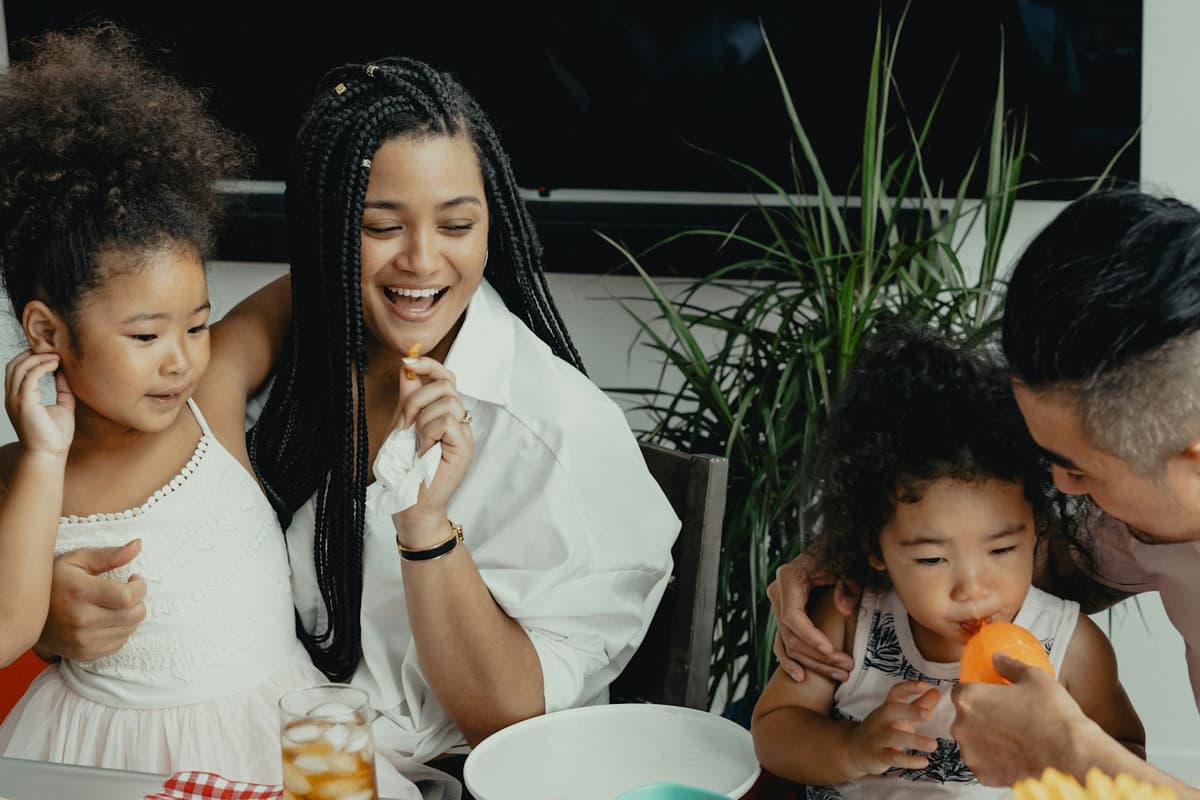
No — and this comes up constantly in bilingual households. Children raised with two languages hit their language milestones within the normal range. They may distribute their early vocabulary across both languages, so counting words in only one of them undercounts what they actually know.
Guidance on this varies by country in tone but not in substance. If you speak two languages at home, use both.
When should I raise it with a doctor?
Talk to your paediatrician if your baby does not respond to sounds or voices, is not babbling or using gestures by around 9 months, has no words by around 15 to 18 months, or loses language they previously had. Losing words is the one that warrants a call rather than waiting for the next check-up.
Hearing is the first thing worth ruling out, because it is common, treatable, and it is the single most frequent physical cause of a language delay. Ask for a hearing check before assuming anything else.
Official guidance
Written by The MyBaby editorial team. How we source and review these.
MyBaby is not a medical device and does not provide medical advice, diagnosis or treatment. Always consult a qualified healthcare professional with questions about your child's health.