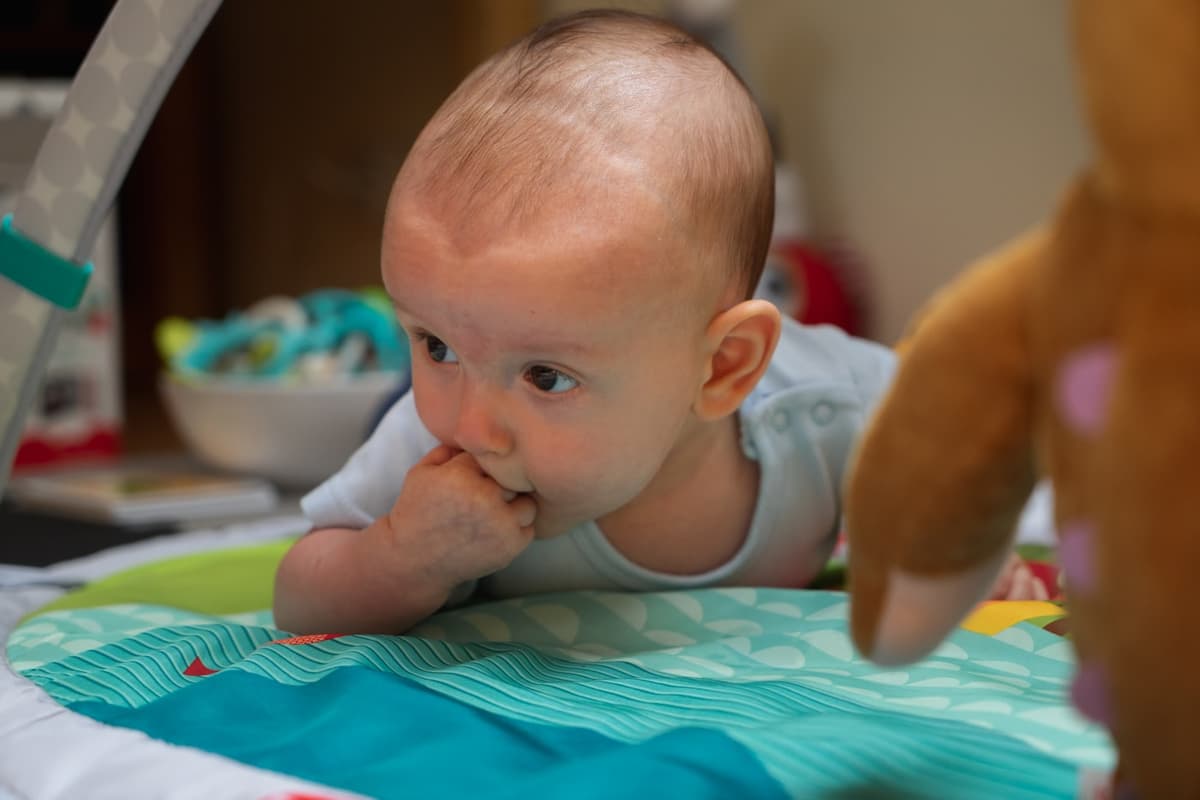
Rolling, Sitting, Crawling and Standing: A Baby's First Year of Movement
8 July 2025 · 4 min read

In roughly the first year, most babies move through rolling, sitting, crawling and pulling up to stand, in that order. The ages below are typical, not deadlines — the order is far more consistent between babies than the timing is.
One thing to know before any of the ages: the CDC's milestone checklists describe what 75% or more of children can do by a given age, which is a deliberate change from the older "50% of children" framing. A milestone your baby has not reached is a reason to mention it at a check-up, not a reason to assume something is wrong.
When do babies start rolling over?
Rolling usually appears somewhere around 4 to 6 months, often tummy-to-back first because it takes less strength. It is the first time a baby moves their whole body somewhere on purpose, and it teaches them to shift their weight and use their core.
What helps:
- Plenty of awake tummy time — the strength for rolling is built there.
- A toy placed just out of reach to one side, which gives them a reason to twist.
- Floor space. A baby cannot roll in a bouncer.
Once a baby can roll, they can roll off things. That is the point at which changing tables and sofas stop being safe places to leave them for a second. Swaddling has to stop before this, as soon as a baby shows signs of trying to roll — the four-month sleep change covers why.
When do babies sit up?
Most babies sit with support at around 5 to 6 months and sit on their own somewhere around 7 to 8 months. The CDC lists leaning on their hands to support themselves while sitting among the things most babies do by 6 months.
Sitting matters more than it looks: it frees both hands. A baby who no longer needs their arms to hold themselves up can pick things up, pass them between hands and turn them over, which is where a lot of early learning happens.
What helps:
- Short spells sitting propped against you or a cushion, reducing the support as they get steadier.
- Toys placed in front and slightly to the side, so they practise balancing while reaching.
- Soft floor. They will topple, repeatedly, and that is part of it.
When do babies crawl — and do all babies crawl?
Crawling typically shows up between 7 and 10 months, and some babies never crawl at all. Bottom-shuffling, commando-crawling on the forearms, rolling across a room and going straight from sitting to pulling up are all normal routes to the same destination. Skipping crawling is not, on its own, a problem.
What helps:
- Supervised floor time in an open, safe space — this is the single biggest factor.
- Something they want placed just beyond reach.
- Different surfaces: a rug, a wooden floor, grass outside.
By 9 months the CDC suggests putting toys slightly out of reach precisely to encourage a baby to crawl, scoot or roll to get them.
When do babies pull up and stand?
Pulling up on furniture usually begins around 8 to 10 months, with cruising — walking sideways while holding on — following, and first independent steps arriving anywhere from about 9 months to well past the first birthday. That range is genuinely wide and being at the late end of it is common.
What helps:
- Sturdy, stable furniture at the right height. Anything that can tip over needs securing to the wall before this stage, not during it.
- Toys on a low table, which give a reason to pull up and then to cruise along.
- Bare feet indoors, which give better grip and feedback than shoes.
What slows motor development down?
The clearest modifiable factor is time spent in equipment that restricts movement. The AAP notes that infants who spend a lot of time confined in car seats, swings, bouncy seats, exersaucers and strollers may show delayed motor development, and that many parents are not aware of it.
None of these things are harmful in normal use — a car seat in a car is not negotiable. The issue is the total number of waking hours a baby spends strapped in somewhere rather than on the floor.
When should I raise it with a doctor?
Mention it at a check-up if your baby is not rolling at all by around 6 months, cannot sit with support by 9 months, is not bearing weight on their legs when held upright, uses only one side of their body, or loses a skill they previously had. That last one — losing a skill — is worth a call rather than waiting for the next appointment.
The CDC publishes a free checklist for every age from 2 months onwards, and comparing your baby against that is far more useful than comparing them with a friend's baby of the same age.
In the app: Growth charts against WHO and CDC standards
Official guidance
Written by The MyBaby editorial team. How we source and review these.
MyBaby is not a medical device and does not provide medical advice, diagnosis or treatment. Always consult a qualified healthcare professional with questions about your child's health.