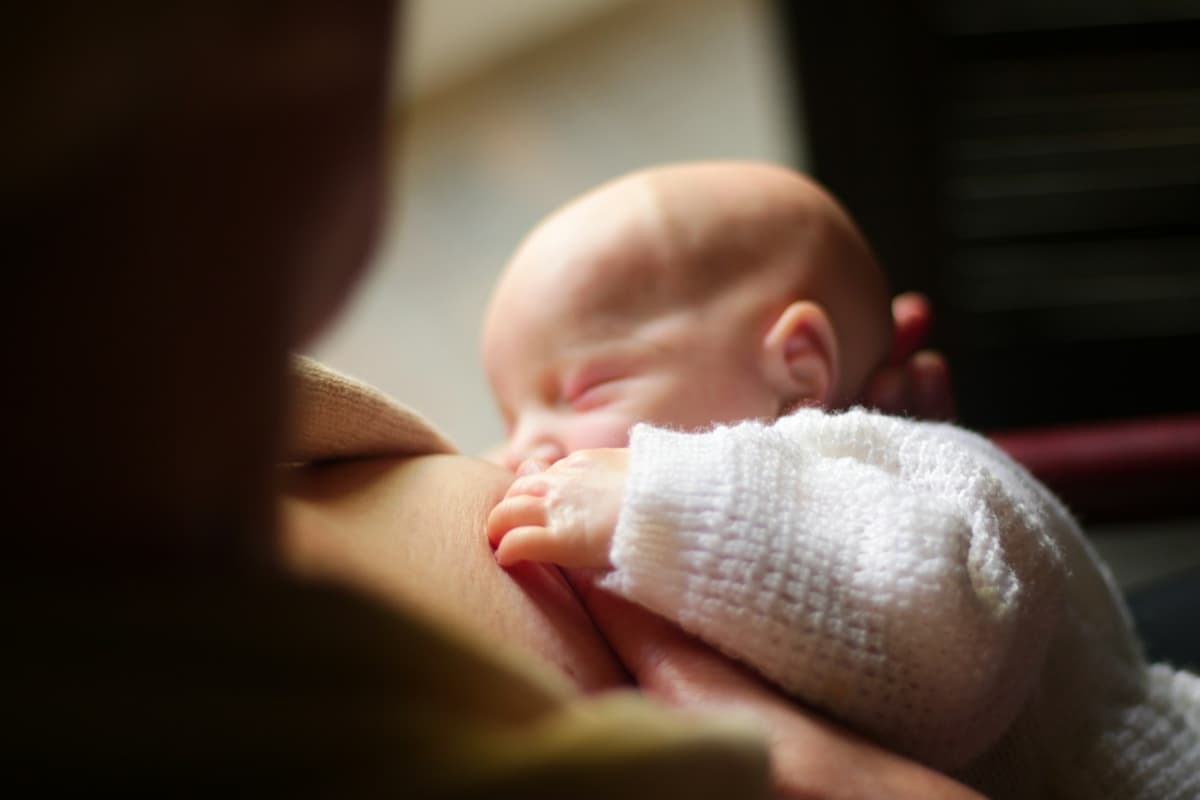
How Much Milk Does a Baby Need After Starting Solids? 6 to 12 Months
18 October 2026 · 5 min read

Is milk still the main food after a baby starts solids?
Yes, for the whole first year. The NHS says breast milk or infant formula should be your baby's main drink during the first year, and that when solids start, your baby still gets most of their energy and nutrients from milk. The World Health Organization puts a number on it: breast milk can provide half or more of a child's energy needs between 6 and 12 months, and about a third between 12 and 24 months, by which point cow's milk can be the main drink. La Leche League International calls breast milk the single most important food in a baby's diet until their first birthday.
Solids are called complementary foods for that reason. WHO says that around 6 months a baby's need for energy and nutrients starts to exceed what breast milk provides, and food fills that gap alongside milk.
How much milk does a baby need from 6 to 12 months?
Less each month, but slowly: from four or five full feeds at 6 months to about three a day by 10 months. The figures guidance gives:
| Age | Milk feeds | How much, bottle-fed |
|---|---|---|
| 6 months | 4 or 5 feeds in 24 hours (AAP) | 6 to 8 oz (180 to 240 ml) per feed (AAP) |
| 7 to 9 months | Around 4 a day, after meals (NHS) | Around 600 ml a day (NHS) |
| 10 to 12 months | About 3 a day (NHS) | About 400 ml a day (NHS) |
Water is not part of these totals: from 6 months it is a few sips from a cup with meals. Breastfed babies are not measured in millilitres. The NHS says a breastfed baby will adapt their feeds to how much food they are having.
The NHS adds one rule that follows from the totals: babies having less than 500 ml of formula a day should take vitamin A, C and D supplements, and all breastfed babies should take vitamins A, C and D from 6 to 12 months.
Meals grow over the same months. From about 7 months, the NHS says, babies move gradually toward three meals a day, and by 10 months they should be having three meals on top of their usual milk feeds. Once meals are established, the AAP puts each one at about 4 ounces, the amount in one small jar of baby food.
Should you give milk before or after solids?
Before or around the meal at the very start, and after it from about 7 months. At the first meals, guidance differs. The AAP suggests a little breast milk or formula first, then very small half-spoonfuls of food, then more milk, so your baby is not frustrated by being very hungry. La Leche League says to nurse before offering other foods, because a baby who is not ravenously hungry is more likely to take an interest in something new, and to offer to nurse again after the meal. The NHS describes a small amount of food before the usual milk feed.
By 7 to 9 months the NHS is clear: a baby's tummy is tiny and fills up quickly, so offer milk feeds after solids and do not force your baby to finish the bottle. While food is practice, milk can come first. Once meals carry real calories, food goes first so the appetite is not spent on milk.
Is it a problem if my baby drops milk feeds quickly?
Not on its own. The NHS says that as a baby eats more solid food, they may want less milk at each feed or even drop a milk feed altogether. Meals should be growing as milk feeds shrink.
The pattern to watch is the opposite one: milk feeds dropping while meals stay at a few spoonfuls. Early meals are small, so a baby who swaps a full feed for two teaspoons of purée is getting less in total. If that is what you see over a couple of weeks, raise it with your health visitor or doctor.
How do you know a breastfed baby is getting enough with solids?
By their growth and their nappies, not by volume. The AAP says breastfed babies take about 1 oz per feed in the first few weeks, an amount that rises slowly and tops out at roughly 4.5 oz at a year, so per-feed intake levels off rather than climbing. The AAP describes your pediatrician weighing your baby at check-ups and plotting the weight on a growth chart, and says progress on the chart is one way to tell whether they are getting enough food.
Day to day, wet nappies are the quickest check. The AAP counts fewer than six wet diapers a day in an infant as a warning sign of dehydration.
How can you see whether the balance is shifting normally?
Look across four to six weeks. A single day says little, because teething, heat or a missed nap can halve a meal or a feed. Milk feeds easing down while meals grow is the normal handover. Milk feeds dropping while meals stay tiny is worth raising. A feeding log that keeps nursing, bottles and solid meals apart shows that shape rather than leaving it to memory.
When should you talk to a doctor about milk and solids?
- Milk feeds have clearly dropped, but meals have not grown to take their place.
- Fewer than six wet nappies a day, a parched, dry mouth, fewer tears when crying, a sunken soft spot, or playing less than usual. The AAP lists these as signs of dehydration and says to call your pediatrician immediately if any of them develop.
- Your baby is excessively sleepy or has sunken eyes, which the AAP lists among the signs of severe dehydration.
- Weight gain has slowed, or your baby has moved off their usual line on the growth chart.
- Your baby refuses milk feeds or meals outright, or you are unsure how much they are taking. The AAP says to talk to your pediatrician about any questions or concerns about how much to feed your baby.
In the app: A breastfeeding timer that survives being interrupted
Official guidance
- World Health Organization — Infant and young child feeding
- NHS — Your baby's first solid foods
- NHS Best Start in Life — What to feed your baby: 7 to 9 months
- American Academy of Pediatrics (HealthyChildren.org) — Starting Solid Foods
- American Academy of Pediatrics (HealthyChildren.org) — How Often and How Much Should Your Baby Eat?
- La Leche League International — Starting Solids
- American Academy of Pediatrics (HealthyChildren.org) — Signs of Dehydration in Infants and Children
Written by The MyBaby editorial team. How we source and review these.
MyBaby is not a medical device and does not provide medical advice, diagnosis or treatment. Always consult a qualified healthcare professional with questions about your child's health.