Starting Solids Checklist: What to Sort Out the Week Before
18 October 2026 · 6 min read
What do you need before your baby starts solids?
A seat that keeps your baby upright with a harness, two or three soft-tipped spoons, a couple of bibs, and a way to cook food soft. A pan and a fork count. Steamer-blenders, pouch kits and first-foods subscriptions are optional, and none of them is needed on day one.
Solids usually start around 6 months, so the week before is a good time to settle the four things that need a decision rather than a purchase: the chair, a short list of first foods, an allergen plan, and how you will store what you cook. Whether your baby is ready at all is a separate question, and the three readiness signs answer it better than the date does.
| What to sort out | What the guidance says |
|---|---|
| Seat | Upright, with a securely fitted harness (NHS); good head control (AAP) |
| First foods | Foods with iron and zinc, such as meat or iron-fortified cereal (AAP); vegetables that are not sweet (NHS) |
| New foods | One single-ingredient food every 3 to 5 days (AAP) |
| Allergens | From around 6 months, one at a time, in small amounts (NHS) |
| Cooked food in the fridge | Use within 2 days; rice within 24 hours (NHS) |
| Defrosted food | Thaw in the fridge or on a microwave defrost setting, eat within 24 hours, reheat once (NHS) |
| First meal | A small amount, once a day, at a time that suits you both (NHS) |
What kind of high chair does a baby need for solids?
One that holds your baby sitting upright, with a harness you use every time. The NHS says a baby needs to be sitting safely in an upright position so they can swallow properly, and to always use a securely fitted safety harness in a high chair. The American Academy of Pediatrics describes the same readiness from the baby's side: able to sit in a high chair, feeding seat or infant seat with good head control.
Check the footrest as well. A footrest that reaches your baby's feet gives them something to brace against, so less of their effort goes into staying balanced. Many are fixed too low for a six-month-old. A sturdy box under the feet does the same job.
Which foods should you have ready for the first week?
A shortlist of six or seven: one or two iron-rich foods, a few vegetables, and a fruit. The AAP says to include foods that provide iron and zinc, such as baby food made with meat or iron-fortified cereal, and the World Health Organization gives the reason: around 6 months, a baby's need for energy and nutrients starts to exceed what breast milk provides. Iron-rich first foods has the full list and how to serve each one.
For vegetables, the NHS suggests including ones that are not sweet, such as broccoli, cauliflower and spinach, so your baby gets used to a range of flavours rather than only the sweeter ones.
Then add one food at a time. The AAP suggests introducing one single-ingredient new food every 3 to 5 days and watching for any reaction. That is also the practical case against mixed pouches at the very start: a blend of eight ingredients is perfectly good food, but if your baby reacts to it, you cannot tell which of the eight caused it. Blends become more useful once the individual foods are known. A first-foods list with introduction ages and allergen flags makes the shortlist quicker to build.
Do you need an allergen plan before starting solids?
Yes, in the sense of one decision: whether to talk to a GP or health visitor before you start. The allergens themselves go in early. The NHS says foods that can cause allergic reactions can be introduced from around 6 months, one at a time and in small amounts, and that evidence shows delaying peanut and hen's eggs beyond 6 to 12 months may increase the risk of an allergy to them. The AAP says there is no evidence that waiting beyond 4 to 6 months to introduce eggs, dairy, soy, peanut products or fish prevents food allergy.
Once a food is introduced and tolerated, the NHS says it should become part of your baby's usual diet. How to introduce each one, and the signs of a reaction, are in the allergen article.
Talk to a GP or health visitor first if
- Your baby has a diagnosed food allergy.
- Your baby has eczema.
- There is a family history of food allergy, eczema, asthma or hay fever.
These are the NHS's three reasons to get advice before introducing foods. If your baby was born prematurely, the NHS also says to ask for advice on when to start solids at all.
How long can you keep homemade baby food?
Two days in the fridge, and 24 hours once defrosted. The NHS rules for batch cooking:
- Cool cooked food within 1 to 2 hours, then freeze or refrigerate it.
- Use food kept in the fridge within 2 days.
- Defrost in the fridge or on a microwave defrost setting, never at room temperature, and eat it within 24 hours.
- Reheat until steaming hot all the way through, then let it cool before serving. Reheat already-cooked food only once.
- Rice is stricter: cool it within 1 hour, eat it within 24 hours from the fridge, and never reheat it more than once.
- Throw away half-eaten portions rather than saving them.
Portions are tiny at first, so freeze in the smallest containers you have. A thawed spoonful that goes uneaten wastes far less than a thawed meal.
When should you give your baby their first solid food?
At a time of day when neither of you is rushed or tired. The NHS says a baby only needs a small amount of solid food, once a day, at a time that suits you both, when you do not feel rushed and your baby is not too tired. That usually rules out the end-of-day slump and the first minutes after waking.
Guidance differs on milk around the first meal. The AAP suggests a little breast milk or formula first, then very small half-spoonfuls of food, then more milk, so your baby is not frustrated by being very hungry. The NHS describes a small amount of food before the usual milk feed. Both keep the milk feed, and milk stays the main source of nutrition for months after the first spoonful.
How much should a baby eat at the first meal?
Half a spoonful or less, in the AAP's advice, increasing gradually from a teaspoon or two. Do not count it. The NHS says that at the beginning, how much your baby eats is less important than getting them used to the idea of eating, that breast milk or first infant formula is still their main source of nutrition and should be offered on demand, and to trust your baby to eat as much or as little as they want.
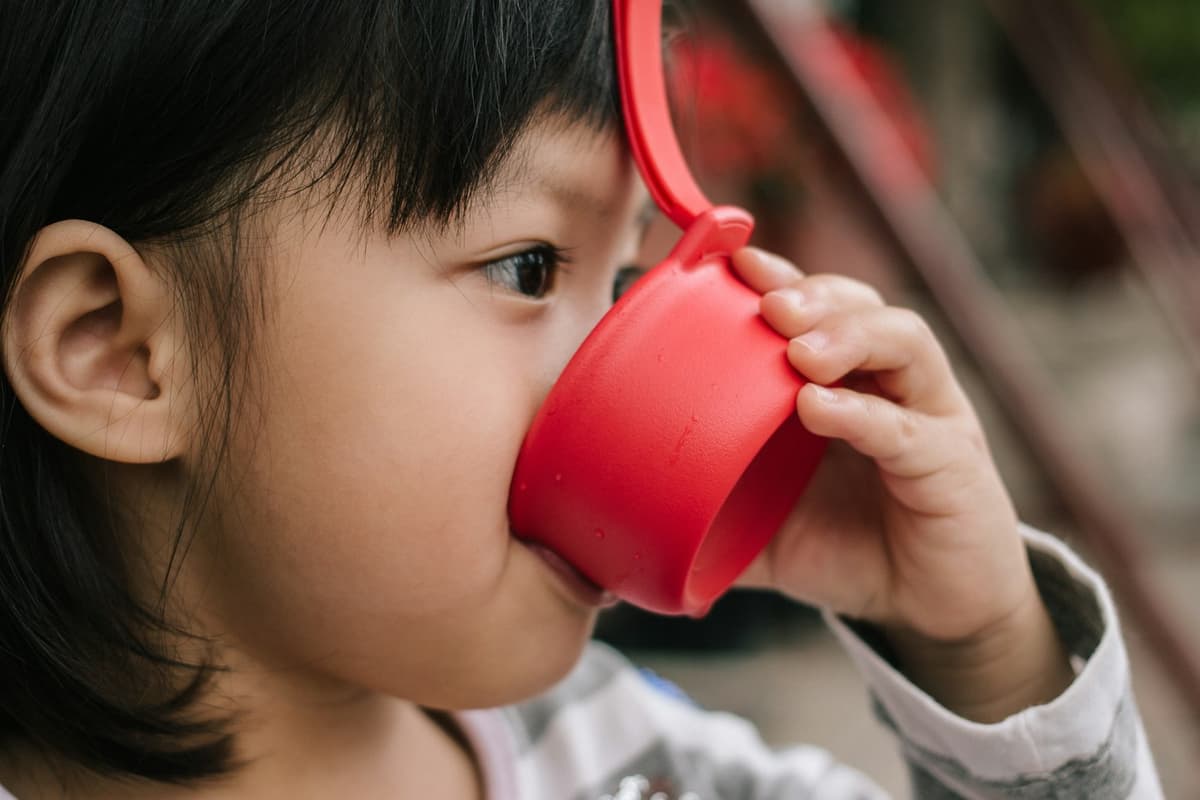
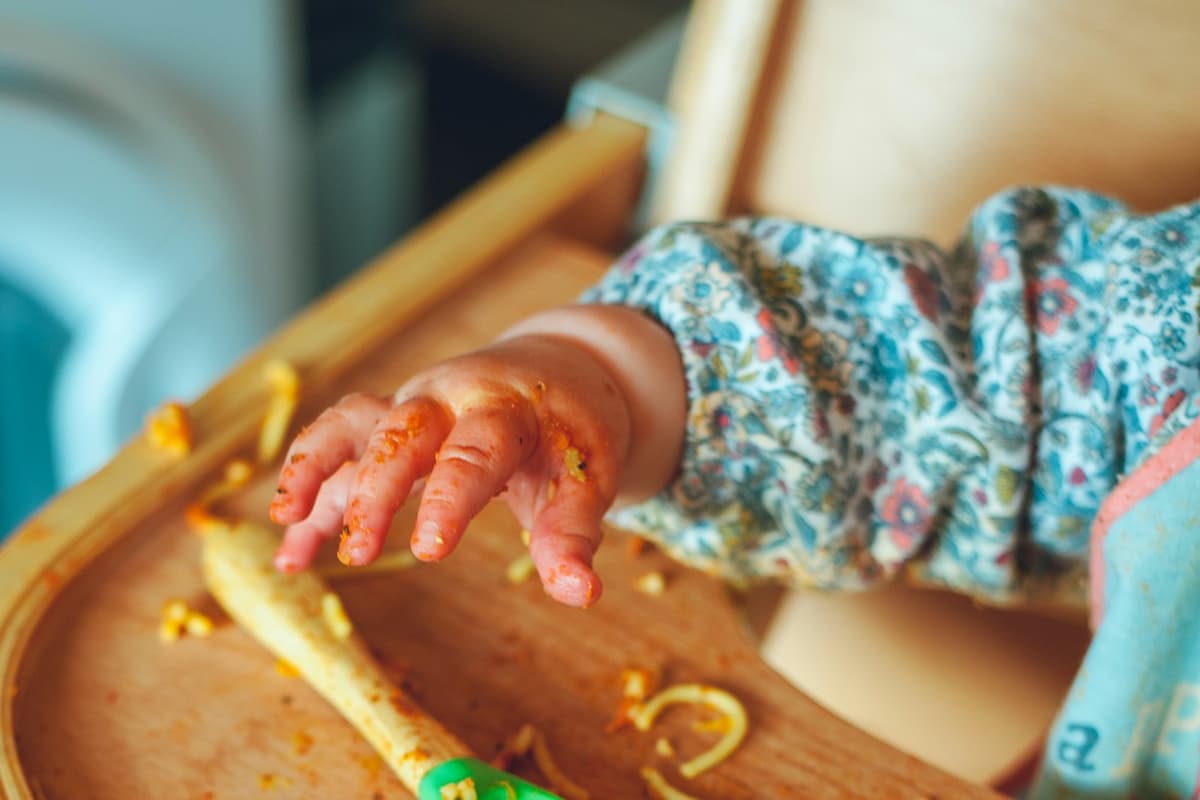
Expect most of it on the chin, the bib and the floor. The AAP says not to be surprised when most of the first few feedings end up on your baby's face, hands and bib. Water can start at the same meal: a few sips from an open cup.
In the app: Introduce solids without losing track of what reacted
Official guidance
- NHS — Your baby's first solid foods
- NHS — Food allergies in babies and young children
- NHS Start for Life — From around 6 months
- NHS Best Start in Life — Storing and reheating food
- American Academy of Pediatrics (HealthyChildren.org) — Starting Solid Foods
- World Health Organization — Infant and young child feeding
Written by The MyBaby editorial team. How we source and review these.
MyBaby is not a medical device and does not provide medical advice, diagnosis or treatment. Always consult a qualified healthcare professional with questions about your child's health.